

How the Laughingstock of the Car Industry Became a Global Powerhouse
- quincyhepburn
- Apr 6, 2024
- 2 min read

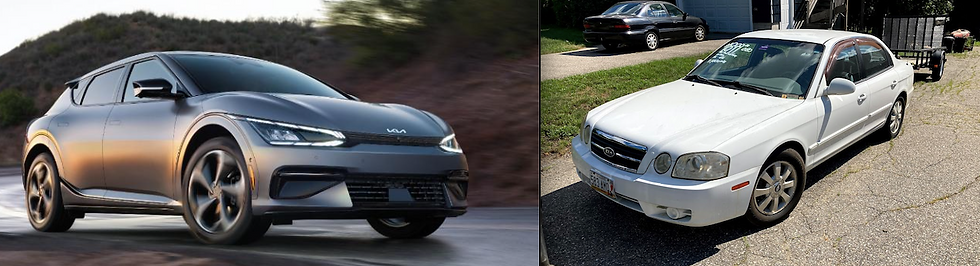
Over the past 20 years, the automotive industry has undergone significant transformation. From company buyouts to global recessions, government stimulus, and even a global pandemic, the auto industry has faced substantial challenges. However, when industry giants falter, it creates demand for budget-minded products often overlooked by larger competitors. These giants typically avoid producing ultra-cheap products, fearing it may tarnish their brand's image. For example, the luxury retail industry often destroys unsold products to preserve the perceived value of their higher-priced offerings. Consequently, when the recession hit in 2008, the North American market struggled to produce affordable products without compromising brand reputation or build quality and reliability.
As Chrysler, General Motors, Ford Motor Company, and even luxury brands like BMW and Mercedes struggled to sell their products, Hyundai Motor Group, a once-overlooked competitor, seized the opportunity to fill the void. The Korean car manufacturer heavily advertised its newest products in the United States amid the recession, allocating more funding to Kia Motors than ever before. Hyundai, which has owned Kia since the late '90s, leveraged its brand's reputation for affordability. Just before the recession in late 2007, Hyundais and Kias sold for an average of 9%-15% less than competitors' vehicles in their respective categories. Despite their lower prices, Hyundai and Kia faced perceptions of subpar build quality and unreliability.
To address these concerns, Hyundai Motor Group introduced an unprecedented solution: a bumper-to-bumper full drivetrain 10-year unlimited mileage warranty. This warranty, unmatched by any other automaker at the time, aimed to reassure consumers and change perceptions about Hyundai and Kia vehicles. By focusing on affordability without compromising perceived quality, both companies tapped into an underserved market segment, attracting budget-conscious buyers hesitant to commit during uncertain times. The affordability of Hyundai and Kia's vehicles offered hope to consumers grappling with financial insecurity, providing a solution amidst economic uncertainty.

Hyundai and Kia now rank as the 6th and 7th largest vehicle producers and sellers in the United States, surpassing Jeep, Subaru, GMC, Volkswagen, and BMW. While their reputation for reliability hasn't particularly improved, the security of a 10-year unlimited powertrain warranty outweighs fears of unreliability.
The success of Hyundai and Kia's initiatives underscores the importance of seizing opportunities amidst financial adversity and leveraging innovation to drive growth and profitability. As the automotive industry continues to evolve, the legacy of Hyundai and Kia's strategic initiatives during the recession serves as a testament to their resilience and vision.

Nice article. I wonder if other companies will try offer similar drive train warranties in response.